Triathlon Case Study: Mental Preparation for the Hawaii Ironman
Using Hypnosis, Imagery and Subconscious Conditioning to Prepare an Elite Triathlete for Ironman Qualification
Duane Franks MSc
I had trained and raced alongside him, and we have known each other for more than 35 years. He subsequently established an online coaching company working with triathletes, from newcomers to highly experienced Ironman competitors.
His own endurance background is exceptional. He has completed 25 Ironman races, more than 100 half-Ironman races, and the Hawaii Triple Ironman, one of the most demanding endurance events in the sport.
For more than three decades, I have worked with him as a consultant in subconscious programming for his athletes. He still uses the self-hypnosis techniques I taught him more than 30 years ago for relaxation.
On this occasion, he asked me to work with one of his athletes who was preparing for the Hawaii Ironman and wanted additional mental training to complement his physical preparation.
The Mental Demands of Ironman
Ironman preparation is fundamentally different from preparing for a short-duration event.
The athlete is not simply training to be physically fit. They are preparing themselves to remain focused and composed through hours of swimming, cycling and running, while managing fatigue, discomfort, changing conditions and the inevitable psychological challenges that arise during a long endurance event.
One of the areas I wanted to address was the athlete's ability to distinguish between productive discomfort and a warning from the body that should be respected.
This became particularly important because he was dealing with a persistent hip problem.
There is a very fine line between using hypnosis and mental conditioning to help an athlete manage the normal fatigue and mental strain associated with endurance training, and using it to override pain caused by a known structural problem.
I am very clear about that distinction.
Hypnosis should never be used to encourage an athlete to ignore injury pain or push through a medically significant structural problem during training or competition.
Pain from an injury is information. It tells you that something may be wrong, and the athlete needs to listen to what their body is communicating.
That principle was deliberately incorporated into our work.
Developing the Sessions
Creating a hypnotic state is relatively straightforward.
The much more challenging—and important—part is deciding what you say once the athlete is there.
The vocabulary used during hypnosis matters.
Words create pictures, feelings, expectations and associations. When working with athletes, I therefore spend considerable time developing language that is specific to the individual, their experiences and their goals.
I have written about this subject in my article [A Doctor Prescribes Medication; A Hypnotist Prescribes Words], exploring the importance of the language used in hypnosis.
Our sessions were conducted approximately every two weeks and were adapted according to what the athlete needed at that stage of his preparation.
I also created a personalised self-hypnosis audio for him so that he could continue the mental training independently between sessions.
Creating a Performance Mantra
One of the first things we developed was a simple mantra that could become an anchor during his self-hypnosis and mental preparation:
"There is absolutely no doubt in your mind that you will qualify for Hawaii."
The purpose wasn't simply to repeat a positive statement.
The mantra was supported by imagery and evidence from his own preparation.
He had trained.
He had been coached.
He had experienced difficult sessions.
He had already demonstrated that he could deal with physical and mental challenges.
The objective was to connect his confidence with the evidence he had accumulated through his preparation.
Building Confidence From Evidence
During the sessions, I used language such as:
You can feel it and you can see it.
Those feelings and emotions are very real, and they come backed up with the knowledge and conviction that you have done everything right.
Every thought and detail has been considered and then reaffirmed.
You have not left anything to chance.
His confidence was not based on wishful thinking.
It was based on the quantity and quality of his training and the structure of the programme developed by his coach.
We reinforced that repeatedly:
Your confidence is warranted because you know you have done the quantity and quality of training that is required.
Your training has been structured and determined by an excellent coach, and you have diligently adhered to it every step of the way.
Even the difficult sessions became part of the preparation rather than evidence that something was wrong.
Even though some training sessions have been challenging, that is what you would expect. In fact, it is what you require of yourself.
Knowing that you have been physically and mentally challenged consistently has given you the strength and confidence to deal with whatever may occur on race day.
Rehearsing Race Day Before It Happened
A significant part of our work involved detailed pre-race imagery.
I wanted him to experience race day mentally before he ever reached the start line.
We began several days before the race.
He would imagine arriving early, knowing the course, having his bike prepared, tapering appropriately and allowing himself time to relax.
The message was simple:
You are rested. You are prepared. You are ready.
From there, we moved into specific experiences from his training.
I asked him to revisit one of his toughest bike sessions in as much detail as possible.
Not simply the physical experience.
The emotions.
The thoughts.
The challenge.
Most importantly, what he had learned from it.
We then did the same with his running.
What had been his toughest training session?
Why had it been difficult?
What had he learned?
How could that experience be used if he encountered a similar challenge during the Ironman?
The purpose was to transform difficult training experiences into evidence of capability.
Instead of:
"That was incredibly hard."
the mental association becomes:
"I have experienced something extremely difficult before, and I know how I responded."
That distinction can be powerful in endurance sport.
Rehearsing the Difficult Moments
The final part of the imagery took him into the race itself.
I asked him to see himself competing in as much detail as possible.
Not simply crossing the finish line.
The entire experience.
The swim.
The bike.
The run.
And within each section, identifying moments where he might reasonably expect to be challenged.
Then mentally rehearsing himself responding effectively.
The objective wasn't to pretend the race would be easy.
Quite the opposite.
It was to become familiar with the experience of being challenged and still responding with confidence.
An Important Part of the Work: Keeping Triathlon in Perspective
There was another issue I considered particularly important with this athlete.
Triathletes can be extraordinarily single-minded.
That determination can be one of their greatest strengths.
It can also become a weakness if the pursuit of a goal begins to overshadow everything else in life.
For this athlete, part of my work was therefore about maintaining perspective.
We worked with ideas such as:
Be a human being, not a human doing.
Triathlon should enhance your life, not consume it.
The goal was to encourage him to recognise that success doesn't have to be defined solely by a finishing time or qualification.
Success can also mean:
enjoying the training
experiencing the race
achieving personal bests
developing physically and mentally
spending time with family and friends
maintaining long-term health
continuing to love the sport
Triathlon is an important part of life.
But it is not life itself.
The Injury: A Different Kind of Mental Challenge
The hip problem required another layer of mental conditioning.
An injury creates more than physical discomfort.
It creates uncertainty.
An athlete can begin asking:
"Will I be able to train?"
"Will I lose fitness?"
"Will I be ready?"
"Will this prevent me from achieving my goal?"
The temptation for a highly motivated athlete is often to focus on what they cannot do.
I wanted to reverse that focus.
One of the central messages in his self-hypnosis audio became:
Focus on what you can do, not on what you can't do.
At the same time, the message had to remain firmly grounded in respecting the injury.
His short-term goal wasn't simply to train harder.
It was to train intelligently without causing further injury.
His long-term goal wasn't simply qualification.
It was to build a healthy, fulfilling lifestyle that could be sustained for many years.
Listening to the Body
One of the most important messages I reinforced was:
Your body has an innate intelligence. Don't ignore it.
Qualifying for Hawaii was the goal.
But achieving that goal required respecting the process that made it possible.
That meant:
listening to the body
following a structured, science-based coaching programme
resisting the urge to do more when the body was indicating that less was appropriate
adjusting short-term goals when necessary
keeping long-term health in perspective
The objective was never to use hypnosis to make pain disappear so the athlete could continue training regardless of the consequences.
It was to help him remain mentally strong while making intelligent decisions about his training and recovery.
The Central Message
The most important message I gave him became the foundation of the self-hypnosis work:
FOCUS ON WHAT YOU CAN DO AND NOT ON WHAT YOU CAN'T DO.
That principle applies far beyond triathlon.
Every athlete eventually encounters something they cannot control—a setback, an injury, poor conditions, an unexpected result, or a period when performance doesn't go according to plan.
Mental strength isn't pretending those things don't exist.
It is learning how to respond to them.
What This Case Demonstrates
This work illustrates how I approach sports performance hypnosis with endurance athletes.
Hypnosis isn't a replacement for physical preparation, coaching, medical care or appropriate recovery.
It is another tool that can complement those things.
For an Ironman athlete, that tool can be used to develop:
confidence based on preparation
detailed race imagery
mental rehearsal
relaxation
focus and concentration
resilience during difficult training
emotional control
appropriate responses to pressure
perspective around performance
self-hypnosis skills that can continue beyond the immediate event
Perhaps most importantly, the mental training should help the athlete become more complete, not simply more competitive.
The ultimate objective is to qualify for the race you have worked so hard to reach—but to do so while maintaining the health, balance and enjoyment that make endurance sport worthwhile in the first place.
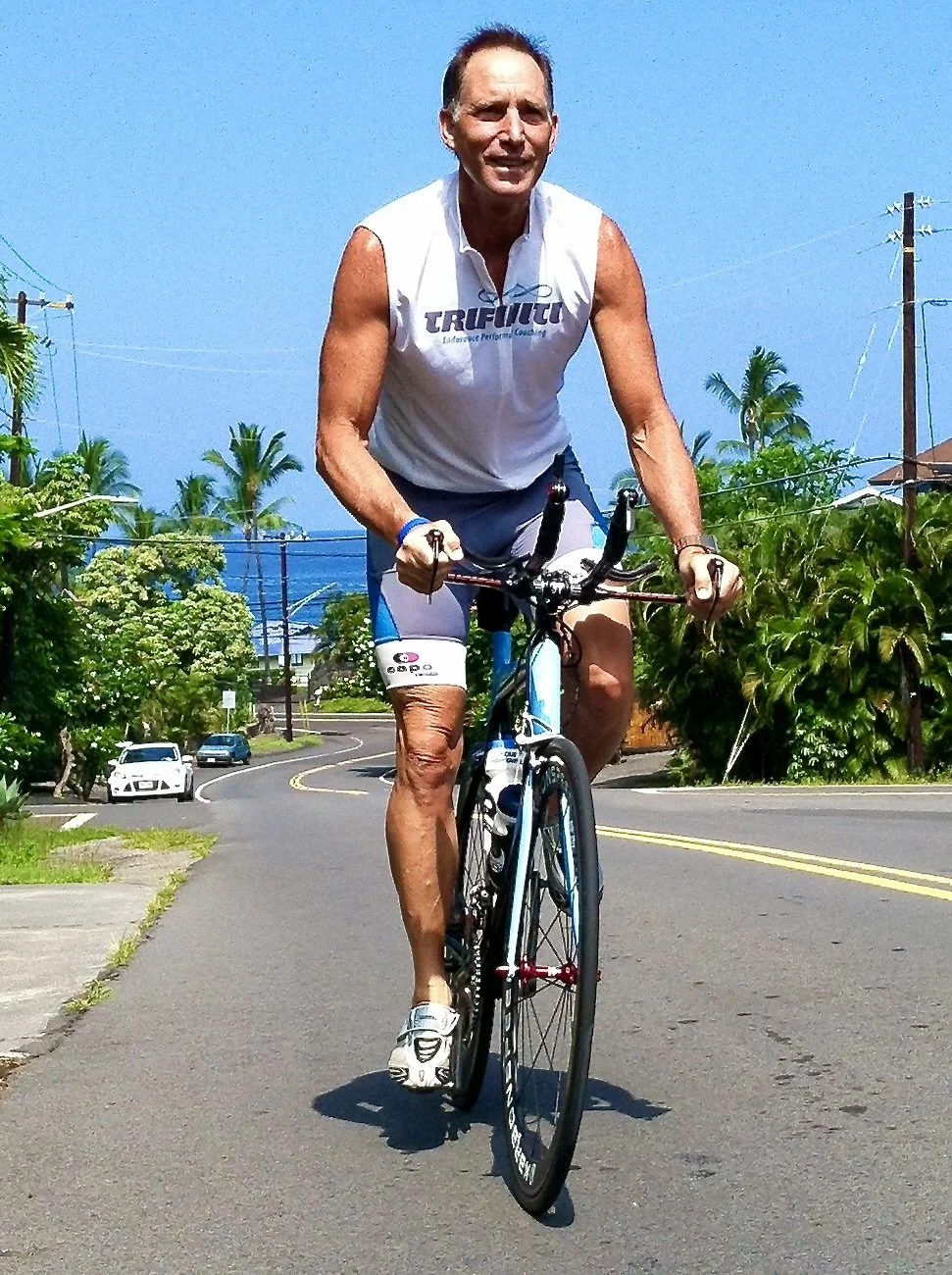
My work with this athlete came through a long-standing professional relationship with one of the most experienced endurance coaches I have known. Duane Franks MSc http://www.trifiniti.com