Your Golf swing is fine. Your Mind is the Problem.
How hypnosis unlocks the mental game every golfer already has — but rarely accesses.
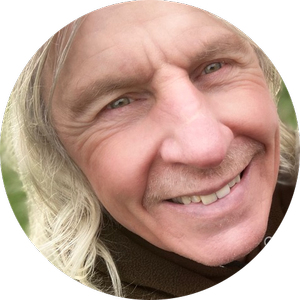
BARRY JONES MSc SPORTS HYPNOTIST 35+ YEARS EXPERIENCE

Rory Mcllroy—”I have delved into hypnosis”
‘There is a lot of what we do on the golf course that is subconscious——-I have delved into hypnosis to tap into my subconscious mind——-everyone is so good out there, it’s about finding how you can get that little edge on people”—-Rory McIlroy
You have hit that shot before. You have drained that putt in practice, stood over a chip that looked identical to this one, and executed it perfectly. So why, when the match is on the line, does something in your head get in the way?
Golf is unique among sports. No game gives you more time to think — and no game punishes overthinking more ruthlessly. Between tee and green, a golfer's mind is capable of dismantling a perfectly grooved swing with nothing more than a thought. The technical fundamentals can be impeccable. The mental game can still wreck everything.
This is where hypnosis enters. Not as a gimmick or a shortcut, but as a precise, evidence-backed tool for accessing the subconscious patterns that drive performance under pressure. And it is a tool that, in the right hands, can transform the way you play.
Why Golf is, Above All Else, a Mental Sport
Every professional golfer knows it. Every club-level player who has bottled a two-foot putt or shanked a routine approach on the eighteenth knows it too. The physical mechanics of golf are learnable, repeatable, and coachable. The mental side is another matter entirely.
Performance anxiety, loss of focus, destructive self-talk, the yips, choking under pressure — these are not character flaws. They are patterns embedded in the subconscious mind, and the subconscious is precisely where hypnosis works.
Research using fMRI brain scanning has now confirmed what practitioners have known for decades: hypnosis produces a measurable, distinct alteration in brain activity. It is not relaxation, not sleep, not a placebo. It is a specific neurological state that gives a skilled hypnotist access to the deeper mental architecture that drives automatic behaviour — including the automatic behaviours that sabotage your golf game.
The Mind Behind the Method: Barry Jones MSc
There is an important difference between a hypnotist who has read about sport and one who has lived it from the inside out. Barry Jones belongs firmly in the second category — and that distinction matters enormously when you sit down to work on your game.
Barry's journey began in physical education and university-level coaching, where he quickly discovered something that has guided his entire career: what separates a good athlete from a great one is rarely physical. He went on to found and coach rugby teams at two California university campuses, both of which won their University Division Championships. He competed at the highest levels of endurance sport — including the Ironman Triathlon World Championship in Hawaii — and took on a brutal biathlon ( 21 hours) from Death Valley to the summit of Mount Whitney in 45°C heat, with more than 23,000 feet of climbing.
It was during that Death Valley race that something stopped him in his tracks. Over four hours of competition, Barry experienced a complete loss of conscious time — still moving, still competing, still functioning — but with his conscious mind entirely stepped aside. He recognised it for what it was: a profound, naturally induced altered state. That experience sent him to the University of California, San Diego, where he completed advanced clinical training in hypnosis through a programme designed for physicians and healthcare professionals.
The result is a practitioner who does not just understand hypnosis academically. He understands what it feels like to perform under extreme pressure, to push the body beyond what feels possible, and to discover what the mind can do when conscious interference is removed. That is the insight he brings to every session.
The hypnotist puts nothing there — he gets the individual to rise to the highest levels he can already reach.
DR. KROGER — PIONEER IN CLINICAL HYPNOSIS
What Hypnosis Actually Does for Your Golf Game
Let us be specific, because this matters. Hypnosis is not about implanting alien abilities or manufacturing a swing you do not have. It works with what is already there — removing the mental static that prevents your trained skills from expressing themselves freely. Here is what that looks like in practice:
01 Silencing the Inner Critic Every golfer carries a running commentary in their head — replaying the last bad shot, catastrophising about the water hazard, second-guessing club selection. Hypnosis works directly on the subconscious roots of this self-defeating dialogue, replacing habitual negative patterns with a quieter, more confident internal voice.
02 Pre-Shot Routine and Mental Reset. The pre-shot routine is one of golf's most powerful performance tools — but only if the mind behind it is truly present. Hypnosis trains deep, rapid focus on demand. Barry works with golfers to anchor a state of calm, committed readiness that can be reliably accessed before each shot, regardless of the scoreboard.
03 Building Unshakeable Confidence. A landmark 2019 research paper, Hypnosis in the Clutch, found that hypnosis-based intervention significantly enhanced self-confidence, causing participants to genuinely believe they could produce exceptional performances. In golf, confidence is not vanity. It is a direct performance variable. Players who expect to make putts make more of them.
04 Mental Rehearsal and Skill Encoding Research has established that vividly imagined movement activates the same neural regions as physically performing it — a phenomenon called functional equivalence. Barry uses hypnosis to turbocharge this process: the deeply focused trance state sharpens and emotionally enriches mental imagery, making the brain's rehearsal of a perfect swing or holed putt neurologically more powerful than imagery alone.
05 Eliminating the Yips and Performance Anxiety. The yips — that involuntary tremor or mental freeze over short putts — are a classic example of the subconscious mind working against the golfer. They are not physical. They are a learned fear response rooted in intrusive negative imagery. A peer-reviewed study by Bell, Skinner, and Fisher (2009) used Solution-Focused Guided Imagery with elite golfers suffering from the yips and found that all three participants stopped exhibiting symptoms after the intervention. Under hypnosis, Barry replaces those destructive mental images with vivid, positive ones — often with striking speed.
06 Recovering from Setbacks in the Round: How you respond to a double bogey on the fourth hole frequently determines what happens on holes five through eighteen. Barry works with golfers on emotional reset — the ability to leave a bad hole behind completely and return to present-moment focus immediately.
⬦
The Science of the Mental Movie: PETTLEP and Hypnosis
Every golfer has heard the advice to "visualise the shot." Very few are told how to do it in a way that the brain actually responds to. Barry's approach is grounded in the PETTLEP model of motor imagery — a framework developed by Holmes and Collins (2001) that identifies the seven elements needed to make mental rehearsal neurologically effective, not just wishful thinking.
PETTLEP stands for Physical, Environment, Task, Timing, Learning, Emotion, and Perspective. Applied to golf, it means imagining not just where you want the ball to land, but the weight of the club in your hands, the texture of the fairway under your feet, the exact pace of your backswing in real time, the feeling of clean contact, and — crucially — the specific emotional state associated with performing that shot well. Generic daydreaming does not achieve this. Hypnosis does.
PHYSICAL Feel the club, the grip, the stance as if you are really there
ENVIRONMENT See, hear and smell the actual course — not an abstract green
TASK Imagine your specific shot, not a composite ideal
TIMING Run the image in real time — not fast-forward
Learning Update imagery as your skill develops
EMOTION Include only feelings tied to correct execution — no fear, no panic
PERSPECTIVE First-person, internal view — you are doing it, not watching it
+HYPNOSIS Deepens every element — sharpening focus and emotional engagement
What is remarkable is that the greatest golfers in history were already doing this intuitively — long before the science existed to explain why it worked. The PETTLEP model is, in many ways, a formalisation of what champions had always known.
I never hit a shot even in practice without having a sharp in-focus picture of it in my head... first I see the ball where I want it to finish... then the scene quickly changes and I see the ball going there: its path, trajectory, shape, even its behaviour on landing.
JACK NICKLAUS — 18-TIME MAJOR CHAMPION
Nicklaus was describing Physical and Timing elements with precision: a full-resolution mental movie, run in real time, from address to landing. What he did instinctively, Barry teaches systematically — and with hypnosis as the amplifier, the depth and vividness of that internal experience is measurably sharpened.
When in trouble, I always stand directly behind the ball, stare intently at my target, and wait patiently for the movies to begin... I stay in the same spot as I rerun all the options until I see one working better than the others.
SEVE BALLESTEROS — FIVE-TIME MAJOR CHAMPION
Ballesteros was applying the Environment element — immersing himself in the specific reality of the shot — and the Task element, running each option until the correct one emerged clearly. This is precisely the kind of multi-sensory, emotionally engaged imagery that hypnosis is uniquely positioned to facilitate and deepen.
What the Research Says: Golf-Specific Evidence
This is not theory. A growing body of peer-reviewed research has looked specifically at imagery interventions in golf — and the findings consistently point in the same direction.
Ploszay et al.
2006 More putts holed, fewer missed badly. Multisensory imagery embedded in a physical pre-shot routine increased successful putts and reduced the distance of missed ones — directly mirroring Nicklaus's insistence on mentally rehearsing every element before a single shot is played.Bell, Skinner & Fisher
2009 The yips: all three participants symptom-free. Elite golfers suffering from the yips were treated with Solution-Focused Guided Imagery. All three stopped exhibiting symptoms after the intervention. Replacing intrusive negative images with vivid, positive ones — exactly what hypnosis enables — proved decisive.Nicholls & Polman
2005 Weakest shots became stronger. Every participant's shot percentage on their self-identified weakest shot improved following an imagery intervention — reflecting the same targeted approach that Ballesteros used, mentally rehearsing the most difficult shots until a clear solution emerged.Brouziyne & Molinaro
2005 Imagery + practice outperforms practice alone. Combining mental imagery with physical practice eliminated poor shots in beginner golfers more effectively than physical practice on its own — a finding with clear implications for how amateurs should structure their training.Smith & Holmes
2004 Audio-visual imagery produces best putting results. Richer, more immersive imagery methods produced significantly better putting performance than written scripts or no imagery. Nicklaus's description of his process as a colour movie with a narrative arc was, it turns out, the neurologically optimal approach.Woolfolk, Parish & Murphy
1985 Positive imagery improves; negative imagery harms. Golfers who pictured the ball going in improved significantly. Those who used negative imagery — picturing the miss — performed significantly worse. This is the Emotion element of PETTLEP in sharp relief: only feelings associated with correct execution belong in the mental rehearsal.
The overall pattern is clear: PETTLEP-based imagery approaches consistently outperform standard practice. Research also suggests that imagery benefits beginners more noticeably in pre-performance routines, while higher-skilled golfers tend to integrate it more thoroughly across all aspects of their training. Wherever you are in your game, the mental rehearsal dividend is real.
⬦
The Evidence Is There — And So Is the Track Record
Barry does not ask clients to take this on faith. The research exists, the brain science is settled, and his own results across decades of practice speak clearly. Consider what happened when he worked with a university basketball programme: free-throw percentage improved from 64.28% to 78.68% — a jump that any golfer would recognise as the difference between inconsistency and reliability under pressure.
Olympic cyclists, national champions, Division I collegiate athletes, the England Rugby Sevens World Cup Team. The consistent finding across every sport is the same: when the mental blocks come down, the trained physical ability emerges more freely and more consistently than the athlete thought possible.
Golf is no different. In fact, given how much of the game takes place between the ears, it may be the sport where hypnosis offers the most direct and measurable return.
My two Division 1 college athletes have worked with Barry, and the experience has been transformative. He combines performance coaching with hypnosis and the results have been clear both in competition and in their overall mindset — better performance, more consistent, stronger mindset, and greater confidence in high-pressure moments.
H. YEAGER — PARENT OF TWO DIVISION I ATHLETES
One Session — or a Season-Long Edge?
One of the things that surprises many golfers when they begin working with Barry is how quickly results can appear. Some athletes feel a meaningful shift after a single session. The subconscious mind, once it receives clear and relevant instruction in the right state, can reorganise surprisingly fast.
That said, Barry is straightforward about this: like physical training, mental training rewards repetition and commitment. The golfer who works consistently on the mental side of their game over a season accumulates an advantage that compounds — greater confidence, more reliable focus, better emotional recovery, a shorter distance between training-ground performance and on-course performance.
Sessions are personalised. Barry brings decades of athlete psychology experience to every conversation, and the language he uses — the words he prescribes, as he describes it — is chosen precisely for the individual sitting in front of him. There are no generic scripts, no off-the-shelf solutions. The approach is shaped by who you are, what your game demands, and where the mental friction actually lives for you.
BARRY JONES — BACKGROUND & CREDENTIALS
MSc — Advanced Clinical Hypnosis, University of California San Diego (programme for physicians & healthcare professionals)
35+ years experience in sports hypnosis and performance psychology
Ironman Triathlon World Championship competitor, Hawaii
Death Valley to Mount Whitney Biathlon (23,000+ ft climb, 45°C heat)
Hypnosis consultant — BBC, NBC, CBS, and FOX TV networks
Keynote speaker across 7 countries; worked with England Rugby 7s World Cup Team
University-level coach; founded two championship-winning rugby teams in California
Worked with Olympians, national champions, and collegiate athletes across multiple sports
The Question Every Golfer Should Ask Themselves
You have invested in your equipment. You have taken lessons, worked on your technique, logged the hours on the range. The physical side of your game has had your full attention.
Has the mental side received the same investment?
Most golfers answer that question honestly and realise the answer is no. The mental game has been hoped for, wished for, worried about — but not systematically trained. What Nicklaus and Ballesteros practised instinctively across decades of championship golf, modern sports science has now validated rigorously. Hypnosis is how you access that same territory deliberately — sharpening the mental movies, silencing the destructive inner commentary, and giving your trained ability a clear path to the surface.
Barry Jones has spent a career helping athletes find that level. He understands pressure from the inside — not from a textbook — and he brings that understanding to every golfer he works with.
Your body already knows how to play this game. It is time to let your mind catch up.
Ready to Work on Your Mental Game?
Sessions available online worldwide. Book a consultation with Barry Jones MSc.