Rugby Neck Injury Case Study: Rebuilding Confidence After Injury
The Athlete
At the time of my rugby injury, I was a player-coach and had recently completed the Ironman Triathlon World Championship in Hawaii. I was incredibly fit aerobically, but Ironman training had changed my body. I had lost muscle mass and was still recovering from the race when I returned to rugby.
I was coaching a brand-new rugby programme, so we didn't have the depth of squad that an established team would have. During one match, one of my players was injured and there was no substitute available.
So I went on myself. I took a very bad tackle that snapped my head sharply forward, rupturing the sternocleidomastoid muscle in my neck.
The Physical Injury
The injury was serious. I ended up in a neck brace for more than a year and experienced associated discomfort for many years afterwards.
Physically, I had to deal with the pain, restrictions and long rehabilitation process.
But the physical injury was only part of the story.
Losing More Than Rugby
At that time, my life revolved around being physically capable. As a player-coach, I believed strongly in leading from the front. I wouldn't ask my players to do something I wasn't prepared to do myself.
Our training reflected that philosophy. Warm-ups could involve five-mile runs, track workouts and hill sprints, and on one occasion I even had my players helping me push my VW bus up a very steep hill. We had built a team around fitness, basic skills and a strong work ethic.
Suddenly, I couldn't be part of it.
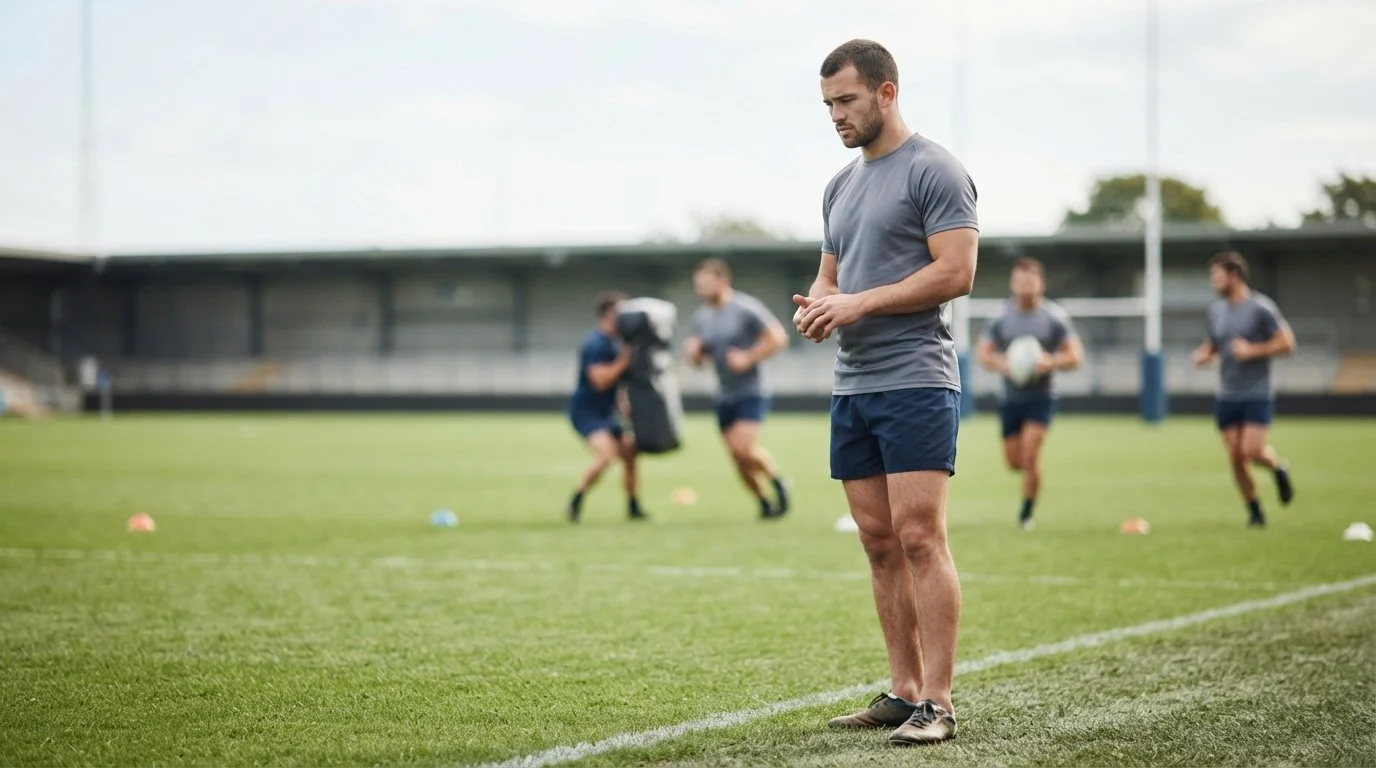
I was probably fitter than anyone else on the team in an aerobic sense, yet I was standing on the sidelines while my players trained and competed without me.
The discomfort and pain were one thing. The emotional effect of being sidelined and not knowing when I would be able to exercise normally again was much more difficult.
I had lost more than the ability to play rugby. I had temporarily lost a large part of my identity and my place within a social group that had become like a family.
The Endurance Experiences That Led Me to Hypnosis
My involvement in endurance sport had already begun to change the way I thought about the relationship between the mind and physical performance.
During training for the Ironman in Hawaii, I began noticing periods when my awareness seemed to change. During long periods of intense physical effort, I could become deeply absorbed in what I was doing, almost detached from the physical discomfort, with my awareness of time and my surroundings seeming to alter.
At the time, I didn't have a name for what I was experiencing.
Looking back, I came to understand these experiences as forms of naturally occurring self-hypnosis and altered states of awareness.
That fascinated me.
Then, during the Death Valley to Mount Whitney endurance event, I experienced approximately four hours that felt like a complete loss of time. That experience had a profound effect on me and intensified my curiosity about what the mind can do during extreme physical and psychological stress.
I began studying hypnosis because I wanted to understand what I had experienced for myself.
What started as curiosity became a serious area of study and eventually developed into the work I do today.
Using Hypnosis in My Own Recovery
After my rugby injury, that fascination with hypnosis became personal.
As I learned more about hypnosis, I began exploring how I could use self-hypnosis, relaxation, imagery and positive suggestion as part of my own recovery.
The physical rehabilitation was necessarily slow, but the mental side of recovery didn't have to stop. Even while my physical abilities were restricted, I could mentally rehearse movement, focus on what I was able to do rather than what I couldn't yet do, and use self-hypnosis to create periods of deep relaxation and distance from some of the frustration of being injured.
That became an important lesson for me:
The mind can continue to train even when the body cannot.
Hypnosis didn't replace medical treatment or physical rehabilitation. It gave me another way to work on the psychological side of recovery—something I now believe is often overlooked when athletes are dealing with injury.
What the Injury Taught Me
My own experience also changed the way I think about sports injuries.
An injury is never simply about the damaged muscle, ligament, joint or bone. It can affect confidence, motivation, identity and a person's sense of belonging.
I experienced that personally, but I had also seen it in the athletes I coached. I became increasingly aware that an athlete can recover physically and still be struggling mentally—with fear, uncertainty, loss of confidence, or the feeling that they are no longer the athlete they once were.
That experience has stayed with me throughout my career.
How This Experience Influences My Work With Injured Athletes
My own injury is one of the reasons I pay so much attention to the mental side of injury recovery.
Physical rehabilitation is essential, and I would never suggest that hypnosis replaces medical treatment, physiotherapy, or appropriate rehabilitation. My role is to work alongside that process and address the psychological elements that can influence an athlete's return.
An athlete may be physically ready to return but still hesitate because of what they remember about the injury. They may have lost confidence in a movement, worry about being injured again, question whether their body can still do what it once did, or struggle with the loss of identity that comes from being unable to participate in the sport that has been central to their life.
These are issues I understand personally.
Through hypnosis, imagery and mental rehearsal, I can help athletes work on confidence, trust, focus and the mental preparation needed for a return to sport. Mental rehearsal can also allow an athlete to continue working psychologically while physical rehabilitation is taking place, within the boundaries established by their rehabilitation team. These are the same areas I identify in my work around injury recovery, including confidence and identity, mental rehearsal, fear of re-injury, and motivation for returning to play.
The Bigger Lesson
Looking back, the injury was a major interruption to my life, but it also changed my understanding of athletes and what recovery really involves.
I learned that the hardest part of an injury isn't always the pain.
Sometimes it is the loss of independence.
Sometimes it is the loss of confidence.
Sometimes it is watching your teammates carry on without you.
And sometimes it is not knowing whether you will ever feel like the athlete you were before.
I know what that feels like because I have lived it.
The body may need time to heal. The mind needs attention too.
Why This Case Study Is Different
Most of the case studies on this site describe my work with athletes.
This one is different.
This is my own case study.
My rugby injury, endurance experiences and discovery of altered states ultimately led me to hypnosis—and shaped the way I work with athletes today.
Recovery is not only about getting the body back. It is also about helping the athlete find their confidence, their identity, and their belief in what they can do next.