A Doctor Prescribes Medications, a Hypnotist Words

Words Have Power
The Hypnotist as a Verbal Physician
Just as a doctor prescribes a chemical compound to shift the body’s internal balance, a hypnotist prescribes linguistic compounds — sentences, metaphors, tonal patterns — to shift the mind’s internal state.
The doctor’s medium is molecule.
The hypnotist’s medium is meaning.
Both aim for transformation: to alleviate suffering, to restore harmony, to unlock capacities obscured by pain, fear, or habit. The hypnotist’s “drug” is suggestion — but suggestion, when well-constructed, is no less potent than medicine. Words have pharmacological power when they reach the right receptor sites in the psyche.
2. Words as Neurological Agents
Modern neuroscience tells us that language doesn’t just describe experience — it constructs it. The words we hear or speak can alter physiological responses: heart rate, hormone levels, and pain thresholds.
So when a hypnotist says,
“Your hand is becoming light, rising effortlessly,”
they are administering a neurochemical script: activating motor areas, visual imagery networks, and parasympathetic relaxation responses.
The hypnotist’s prescription, therefore, is carefully dosed in tone, rhythm, and timing — much like a doctor must consider dosage, interval, and interaction. The wrong words, like the wrong medication, can create resistance or side effects. The right words can bring release, clarity, or healing.
3. The Art of Formulation
A physician studies formulas; a hypnotist studies formulations.
The success of either depends not just on content, but on delivery:
The way a sentence curves and breathes.
The cadence that synchronizes with the client’s breathing.
The pauses that invite subconscious absorption.
In hypnosis, language is pharmacopoetic — it must be felt as much as understood. A well-crafted suggestion functions like a slow-release capsule: the conscious mind dissolves the surface, and the unconscious absorbs the essence.
4. The Ethics of Prescription
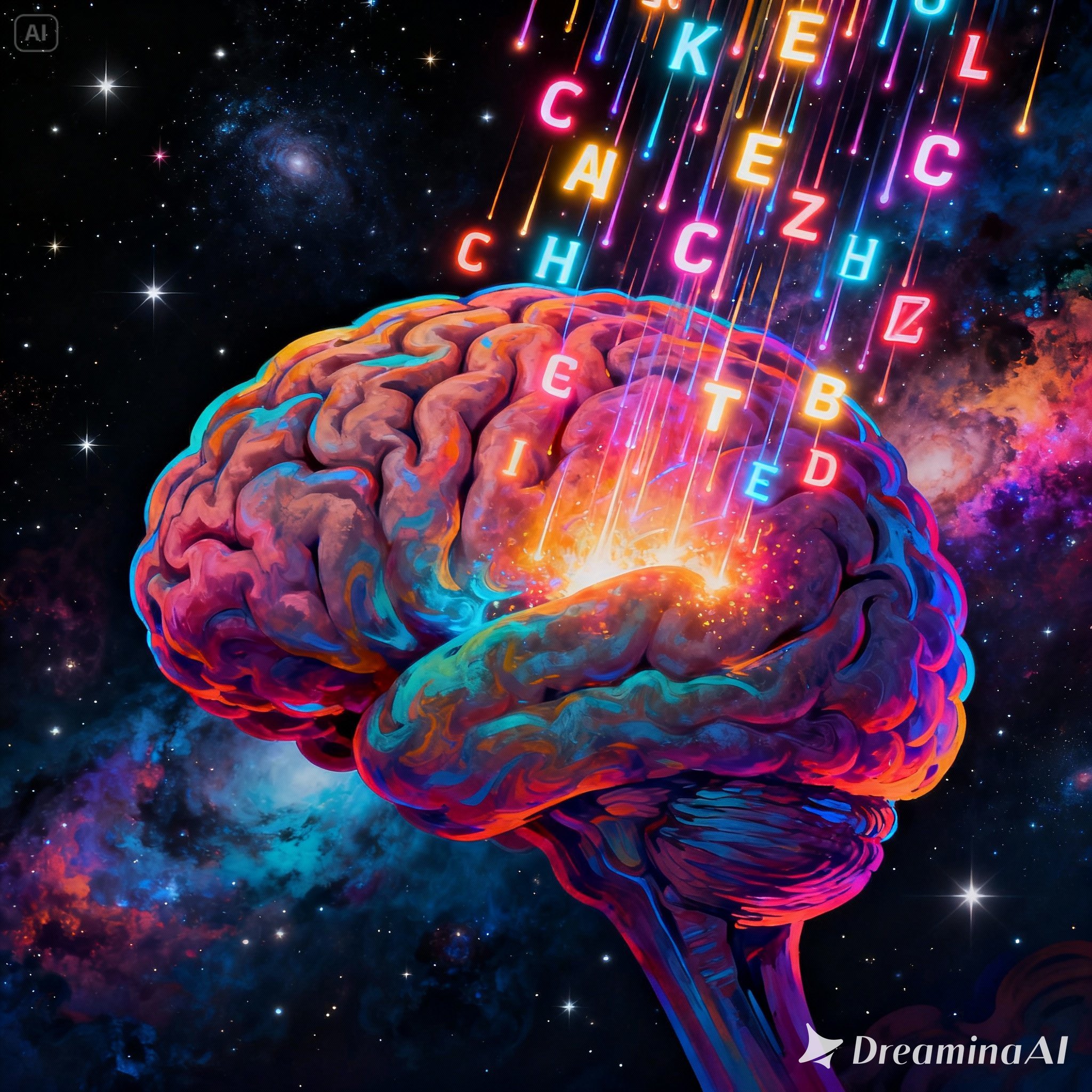
The Power of Words
Both roles require immense care.
A doctor must ask: What does this body need to heal?
A hypnotist must ask: What does this mind need to believe to be whole again?
Neither should impose; both should listen. The best hypnotic prescriptions emerge not from authority but from empathy — from hearing the metaphors the client already lives inside and offering gentler, more empowering ones in return.
5. The Poetic Parallel
Ultimately, the hypnotist’s craft resembles that of the poet more than the physician.
Poetry, too, is a form of verbal medicine — it reorders perception, renews vitality, and often operates beneath awareness.
But hypnosis takes that poetic potency and aims it with surgical precision: a poem that changes blood pressure, a metaphor that rewires trauma.
6. In Summary
Doctor Hypnotist
Prescribes chemicals Prescribes words
Alters biochemistry Alters neurolinguistic patterns. Works on the body Works through the mind Studies pharmacology Studies suggestibility and semantics.
Heals through molecules Heals through meaning
For the high-performing athlete, the margin between winning and losing rarely lives in the body — it lives in the mind.
Training methods, nutrition protocols, and recovery strategies have become so advanced and so accessible that the physical gap between elite competitors has never been narrower. Biomechanical analysis, GPS load monitoring, sleep optimization, and precision nutrition have stripped away layer after layer of physical disadvantage. What remains — what ultimately separates the athlete who performs at their absolute ceiling under pressure from the one who fragments beneath it — is increasingly, and undeniably, a neurological question. A question of what the mind believes is possible in the moment that matters most.
And yet, for all the obsessive investment athletes make in their physical preparation, the internal architecture of the mind is left almost entirely unbuilt.
The average elite athlete will spend thousands of hours refining their mechanics, conditioning their cardiovascular system, and fortifying their body against injury. They will track their macros to the gram, monitor their heart rate variability each morning, and sleep in altitude tents to coax one more percentage point from their physiology. But the internal dialogue running beneath every sprint, every competition, every moment of high-stakes execution — that voice, that relentless internal narrator — is left to develop by accident, shaped by childhood, by criticism, by failure, by fear.
That voice is not merely psychological background noise. It is not just an attitude problem or a confidence issue to be addressed with a motivational poster or a pre-game pep talk. As the science below makes powerfully clear, that internal voice is a biochemical event. Every word the mind speaks to itself — every self-instruction, every fear-based prediction, every story about capability and worthiness — triggers a cascade of neurological and physiological responses. It shifts cortisol and adrenaline levels. It alters pain thresholds. It opens or closes access to fine motor control. It determines whether the prefrontal cortex — the brain's executive performance center — remains online under pressure, or whether the amygdala hijacks the moment and sends the athlete into a spiral of anxiety, hesitation, and self-sabotage.
The words inside an athlete's mind are not describing their performance. They are constructing it.
This is a distinction that changes everything. Because if language is merely descriptive — if words are simply a commentary track running alongside physical reality — then managing self-talk is a cosmetic exercise, a matter of thinking positively and hoping for the best. But if language is constructive — if the words spoken internally are actively shaping neurological states, hormonal environments, and physical outcomes — then the athlete who fails to deliberately train their inner language is leaving one of the most powerful performance levers completely untouched.
Consider what happens in the moments before a high-stakes performance. The athlete who steps to the start line and thinks I always fall apart in big moments is not expressing a truth — they are issuing a neurological prescription. That sentence activates threat-response circuitry, elevates cortisol, tightens musculature, narrows attentional focus, and primes the body for survival rather than performance. By contrast, the athlete who has been trained to deploy precise, well-constructed internal language in that same moment is administering a fundamentally different neurochemical cocktail — one that maintains composure, preserves motor precision, and keeps the competitive mind open, clear, and dangerous.
This is the realm where hypnosis, suggestion, and the deliberate architecture of language become not a mystical curiosity, but a performance science.
For too long, hypnosis has been relegated to the fringes of athletic preparation — associated in the popular imagination with swinging pendulums, theatrical stagecraft, and the surrender of control. This perception has caused an enormous number of high-performing athletes to walk past one of the most rigorously documented and neurologically grounded tools available to them. The science of hypnotic suggestion is, at its core, the science of how precisely constructed language reaches below conscious resistance and directly rewires the subconscious patterns that govern automatic behavior under pressure.
And for the athlete, everything under pressure is automatic. There is no time to think in the final hundred meters, in the penalty shootout, in the decisive set. The athlete performs from their subconscious architecture — from the beliefs, the reflexes, the emotional patterns that have been encoded below the level of deliberate thought. If that architecture is built from fear, from limiting belief, from years of unexamined negative self-narration, then no amount of conscious positive thinking in the moment will override it. The programming runs deeper than willpower can reach.
This is precisely what makes the framework you are about to encounter so significant for the serious athlete. What follows is not a motivational philosophy or a collection of affirmations. It is a rigorous, anatomically precise examination of how language functions as a neurological agent — how, like a pharmaceutical compound administered with the right dosage and timing, a well-constructed word, metaphor, or suggestion can cross the threshold of conscious awareness and produce measurable, lasting changes in the psychophysiological systems that determine athletic performance.
The athlete who understands this is no longer just training their body. They are training the very instrument through which the body receives its instructions.
And that changes the entire equation of preparation, recovery, resilience, and peak performance from the inside out. What you are about to read is not supplementary to elite athletic development. For the athlete competing at the highest level — where the physical margins have been exhausted and the mental frontier remains largely unmapped — this may be the most important preparation you have never done.